Beard Transplant Over Acne Scars: Assessment, Limits and Questions
Considering a beard transplant over acne scars? Explore assessment questions, skin health, donor planning and realistic limits before requesting a consultation.
What should I ask before considering a beard transplant over existing acne scars?
A beard transplant may be considered for selected areas of hair loss over old acne scars, but it does not remove scar texture. Ask about skin health, active acne, donor suitability, hair direction, risks and follow-up. Suitability and the likely benefit require an individual clinical assessment.
Request a consultation →General educational information. This article has not been reviewed by a named clinician. It cannot establish whether your scars or skin are suitable for transplantation.
A beard transplant may be considered in selected cases of scarring hair loss, including after acne, but it is not a general treatment for every acne scar. The first question is what you want to change: missing beard hair, the shape of a patch, depressed skin, discolouration, or a combination of concerns.
This guide is about scars already present before surgery. Scars that can result from the transplant itself are a separate consideration, covered in our guide to beard-transplant scars and the clean-shaven look.
Separate hair coverage from scar treatment
Transplantation places hair follicles into a recipient area. It should not be presented as a promise to erase a depressed scar, flatten a raised scar or make the skin unchanged when clean-shaven. Ask the clinician to distinguish the possible appearance of added hair from any treatment directed at the scar itself.
The American Academy of Dermatology explains that acne-scar treatment depends on an assessment of the scars and the person's circumstances. If skin texture is your main concern, ask whether a dermatology assessment is more appropriate before discussing hair placement.
What does the assessment need to establish?
The ISHRS beard and mustache transplantation overview identifies acne-related scarring hair loss among the situations assessed for facial-hair transplantation. It also emphasises the condition of the recipient skin and the need to address issues such as active acne, inflammation or infection before surgery.
That does not mean every old acne scar is a candidate. Ask the surgeon what findings matter in your case, what cannot be decided from photographs, and whether another opinion or further assessment is needed. A suitable plan may differ from the amount of coverage you initially hoped to achieve.
Prepare your skin and treatment history
Bring a timeline rather than just a cropped picture of the patch. The following details can make the discussion more precise:
- When acne affected the area and whether you still develop lesions there.
- Previous scar procedures, facial surgery, tattoos or hair transplantation.
- Current and past acne medicines, including prescription treatments.
- Any history of unusual healing, raised scars or changes in skin colour.
- Your usual beard length and whether a close shave is important to you.
Do not stop or alter a prescription medicine to prepare for surgery without the treating clinician's advice. Ask the team to provide your individual preparation instructions after assessing your history.
Discuss donor hair and the appearance you want
Ask where the donor hair would come from and how its texture, thickness and colour might fit the surrounding beard. The design should take account of the existing beard and your grooming preferences, rather than simply filling a marked area to a headline graft count.
Useful questions include which areas would be prioritised, what density is realistic, whether additional procedures might be considered, and what compromises you should understand. Ask the surgeon to distinguish a graft from a hair when explaining the plan and quote.
Consider new surgical risks as well as the old scars
A procedure intended to improve beard coverage introduces its own risks. ISHRS discusses possible colour changes, bumps around grafts and unsuitable hair direction in facial-hair transplantation. Ask about both the recipient area and the site where donor hair would be taken.
Your preferred beard length matters. Ask what can reasonably be said about the area with long hair, short stubble and a close shave. Neither the surgeon nor an online before-and-after gallery should promise invisible scars or a particular cosmetic outcome.
Use photographs to ask better questions
Ask whether the examples shown involve a comparable starting problem and whether the clinic can confirm their treatment history and follow-up timing. A dense-beard photograph is not evidence that acne scars were treated. Lighting, angle, hair length and elapsed time can change what you can see.
Our beard-transplant results guide can help you frame the comparison. Only photographs accurately described and shared with permission should be used to discuss a particular scar-related case.
What should the quote and follow-up explain?
Request a written, individual quote that distinguishes assessment, the proposed transplant, medicines, follow-up and any separate scar treatment. Do not assume that a general beard package includes treatment of skin texture or further procedures.
If you are travelling, agree on the first review, when travel is appropriate, who to contact for a problem and how care will continue after you return home. The beard-transplant quote checklist helps compare those arrangements without relying on an advertised starting price.
Questions before committing to treatment
- Is the concern missing hair, skin texture, or both?
- Does my current skin need treatment before a transplant decision?
- What can examination establish that photographs cannot?
- What change is realistic, and what would remain visible?
- What donor hair, design and follow-up do you propose?
- What alternatives and additional risks should I consider?
Arrange an individual assessment in Yerevan
Read about beard and mustache transplantation at United Hair Clinic, or request a facial-hair assessment. Explain that the concern includes previous acne scarring. The clinic needs to assess your situation before confirming whether treatment can be offered.
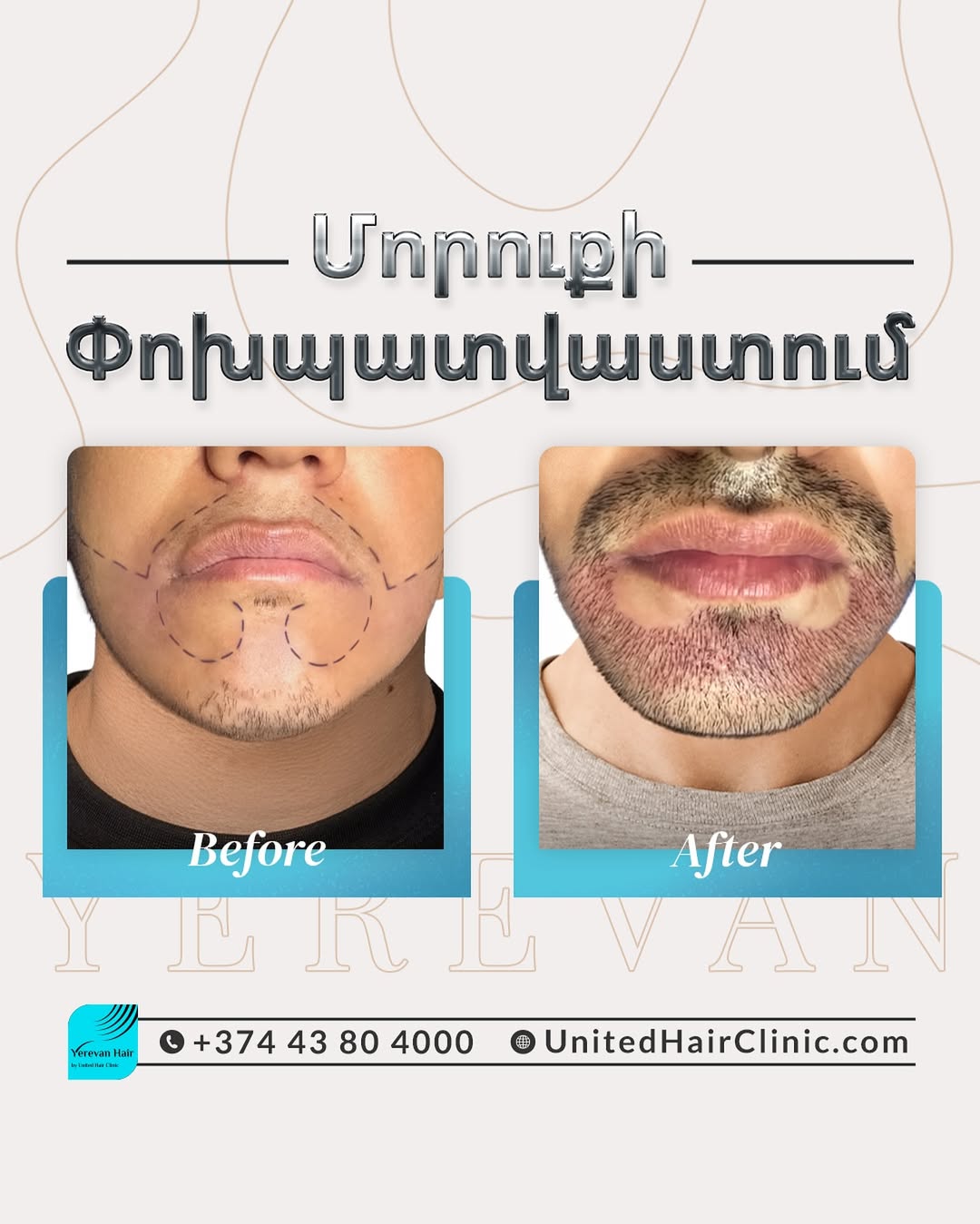
Image note: the clinic's beard-restoration photograph illustrates facial-hair restoration. Treatment of acne scars in that case has not been verified; it is not evidence of an acne-scar-specific outcome.
Sources and review status
Sources: ISHRS: Beard and Mustache Transplant; AAD: Acne scars—consultation and treatment. Sources checked on 22 November 2026 as an editorial fact-check. No named clinician review, success rate, scar-removal guarantee or individual treatment recommendation is claimed.